
- 1 in 3 active crypto traders cut or reduced spending on everyday life since October 2025.
- 41% say their biggest regret is not having a clear exit plan, not how much they invested.
- Despite the drawdown, 79% plan to hold or add to their position over the next six months.
Bitcoin is roughly 40% below its October 2025 peak, and for numerous retail traders that means sitting on unrealised losses, which might be measured in months of salary for some. CEX.IO surveyed 1,100 active crypto users from the US to find out how the current bear market affected their lives. The answers paint a picture of a bear market that is quieter than 2022, but still pressing against household finances in ways that rarely show up in a price chart.
More Than 1 in 3 Traders Cut Spending
One way to assess the bear market’s impact is whether users reduced spending on non-crypto purchases. 36% said yes to reduction of costs, while 10% of respondents said those weren’t minor adjustments and they needed to make real sacrifices specifically to keep their positions intact.
In addition, 37% of respondents stated that they delayed or cancelled a purchase because of their crypto portfolio — and for 21% of all respondents, it was potentially major expenses like a home, a car, or a renovation.
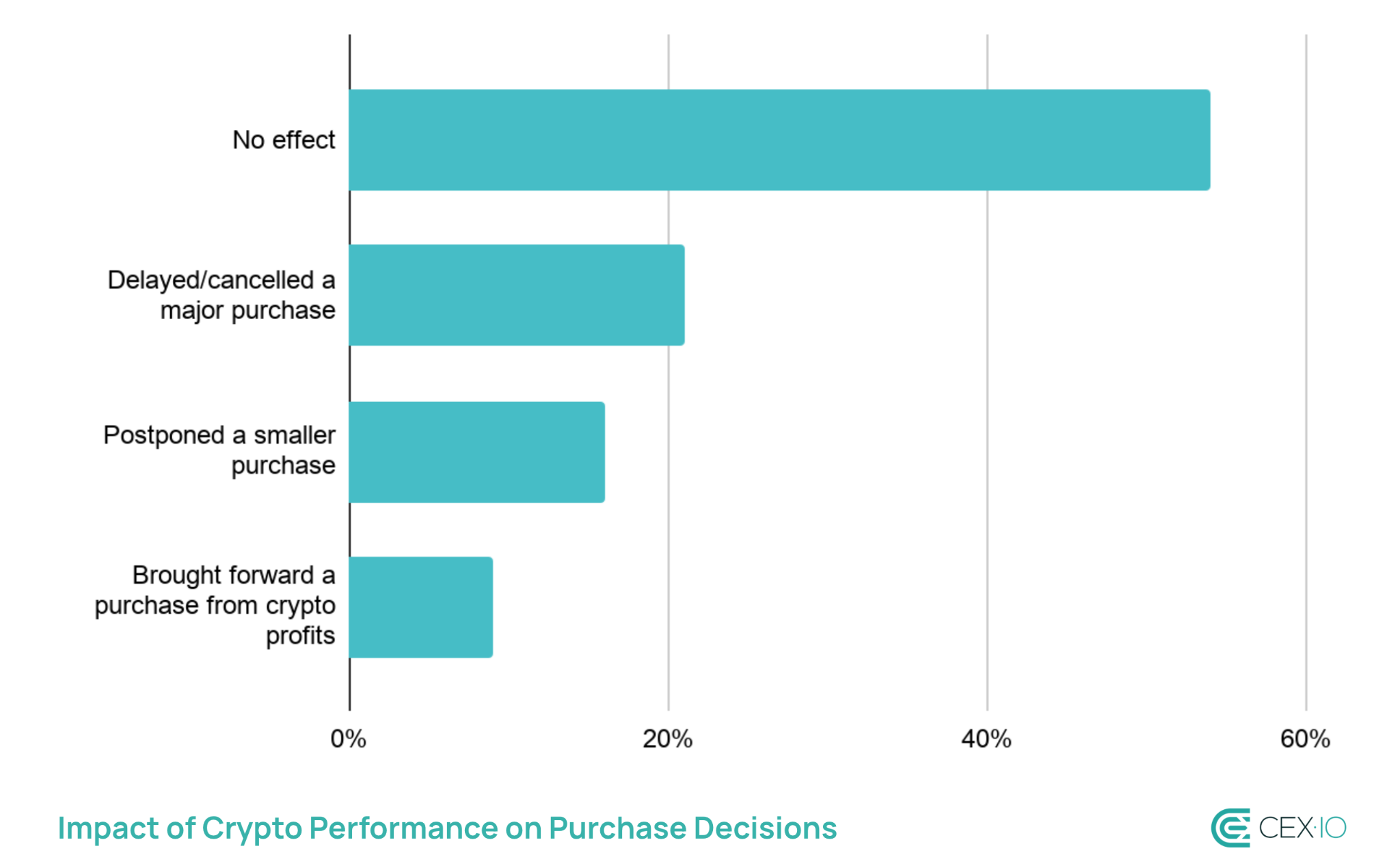
To calibrate how large that is: a Redfin/Ipsos survey from October 2025 found that 17% of Americans delayed a major purchase because of the federal government shutdown — a macroeconomic event that dominated headlines for weeks. The crypto bear market produced a comparable or larger effect on the people exposed to it. However, crypto users typically aren’t that vocal about it.
That silence shows up in another part of the survey. Only 5% of respondents stated they have someone who knows exactly how much crypto they hold and what it is currently worth. 41% said someone knows they hold crypto but not the scale of it, while 18% keep it entirely private.
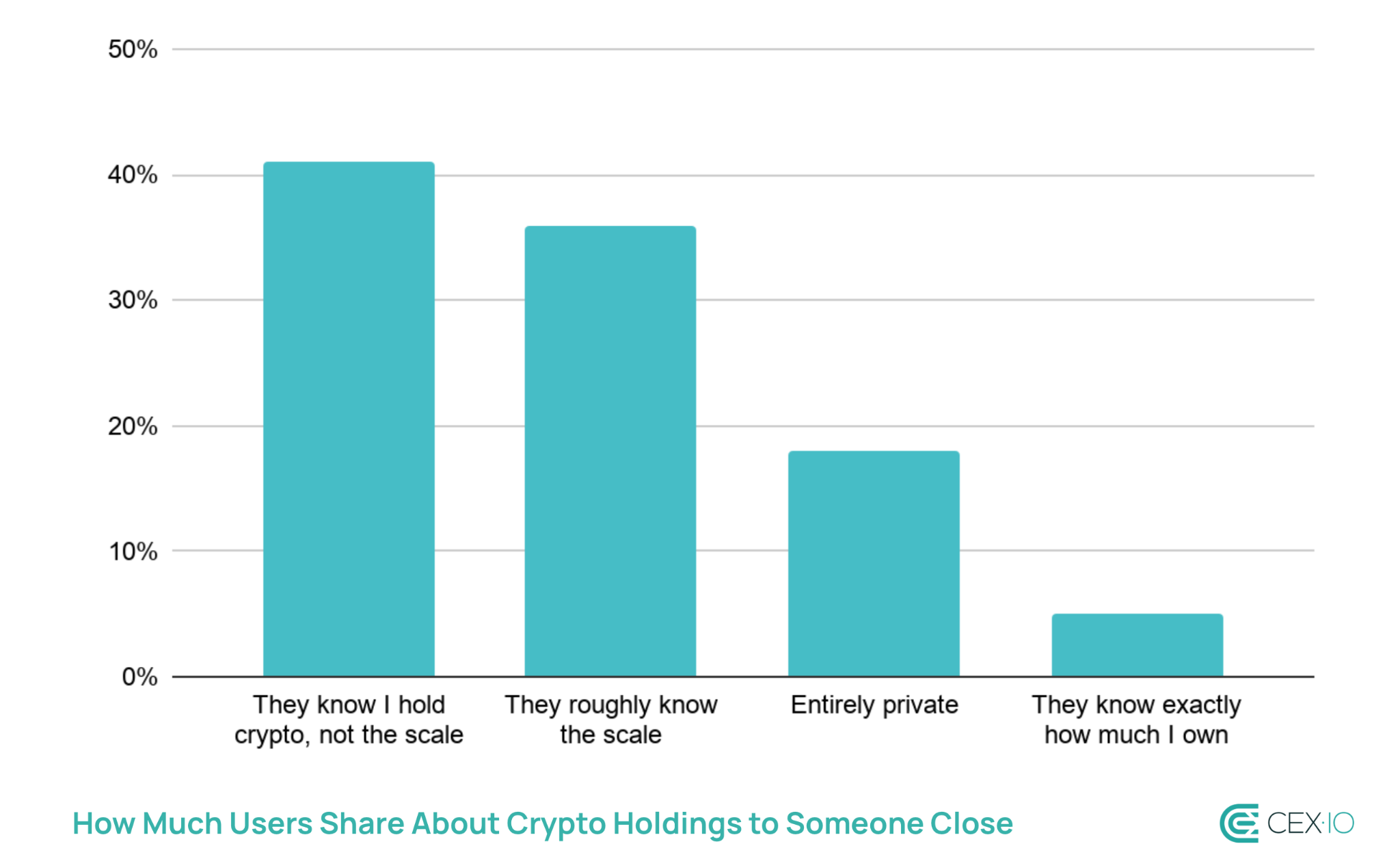
This isn’t necessarily about hiding. Inherently, crypto is an individual investment with no shared account or broker statement. Giving someone a precise number would require sharing access or constant updates, which could be a burden. As a result, the majority of crypto users are navigating a bear market largely alone, and the people around them have no idea.
The Cashflow Pressure Is Still Relatively High
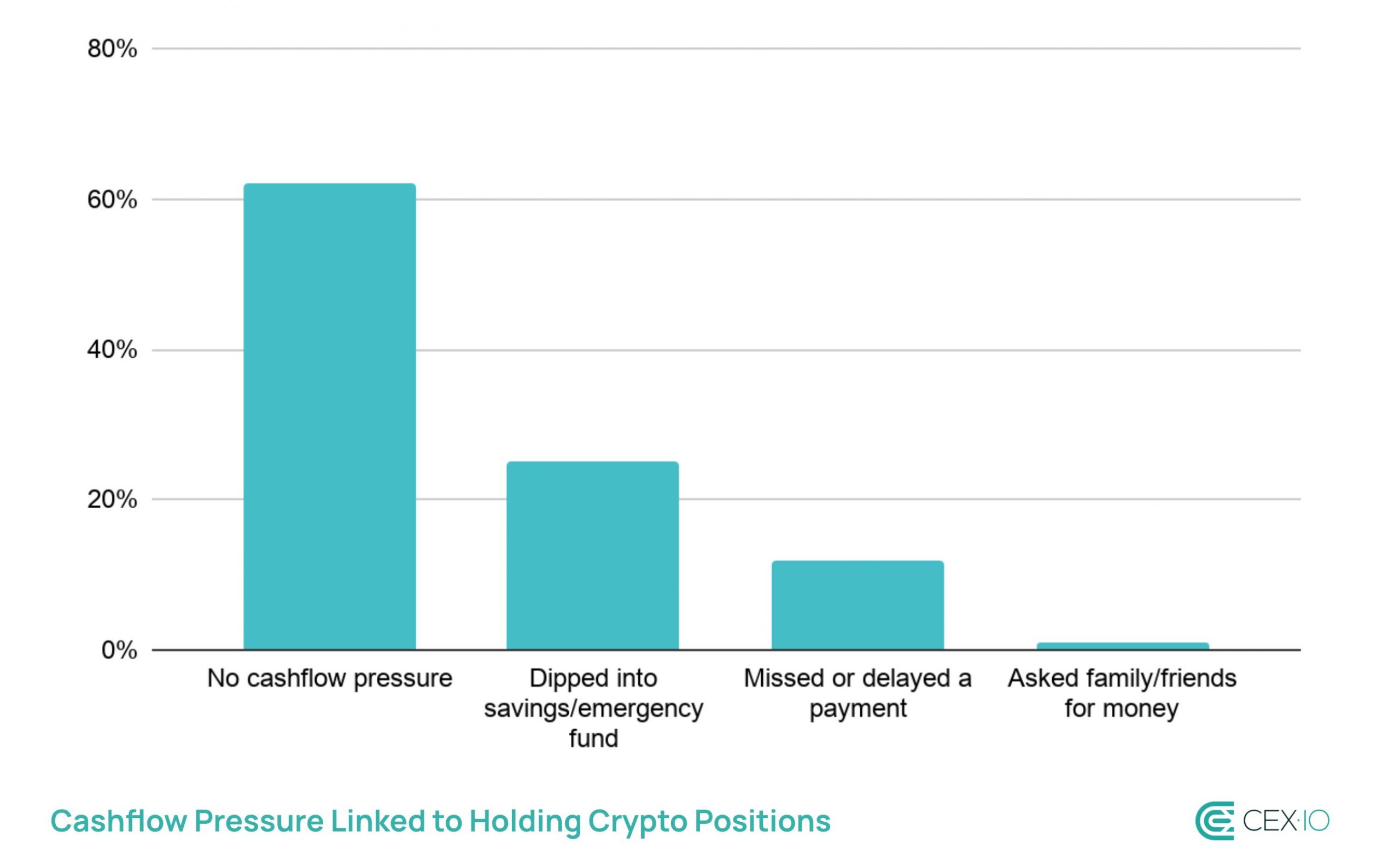
77% claim they did not take on extra debt to cover their crypto investments. But the more telling measure is cashflow: when stripping away the question of formal debt and simply asking whether people felt financial pressure, 38% said they experienced some form of disruption since October 2025. A quarter dipped into savings or an emergency fund to keep things normal on the surface, while 12% shared that they missed or delayed a bill payment or other types of regular payments because of crypto.
It’s important to keep in mind that those numbers are almost certainly conservative due to social sensitivity of these topics, suggesting that the actual number might be higher.
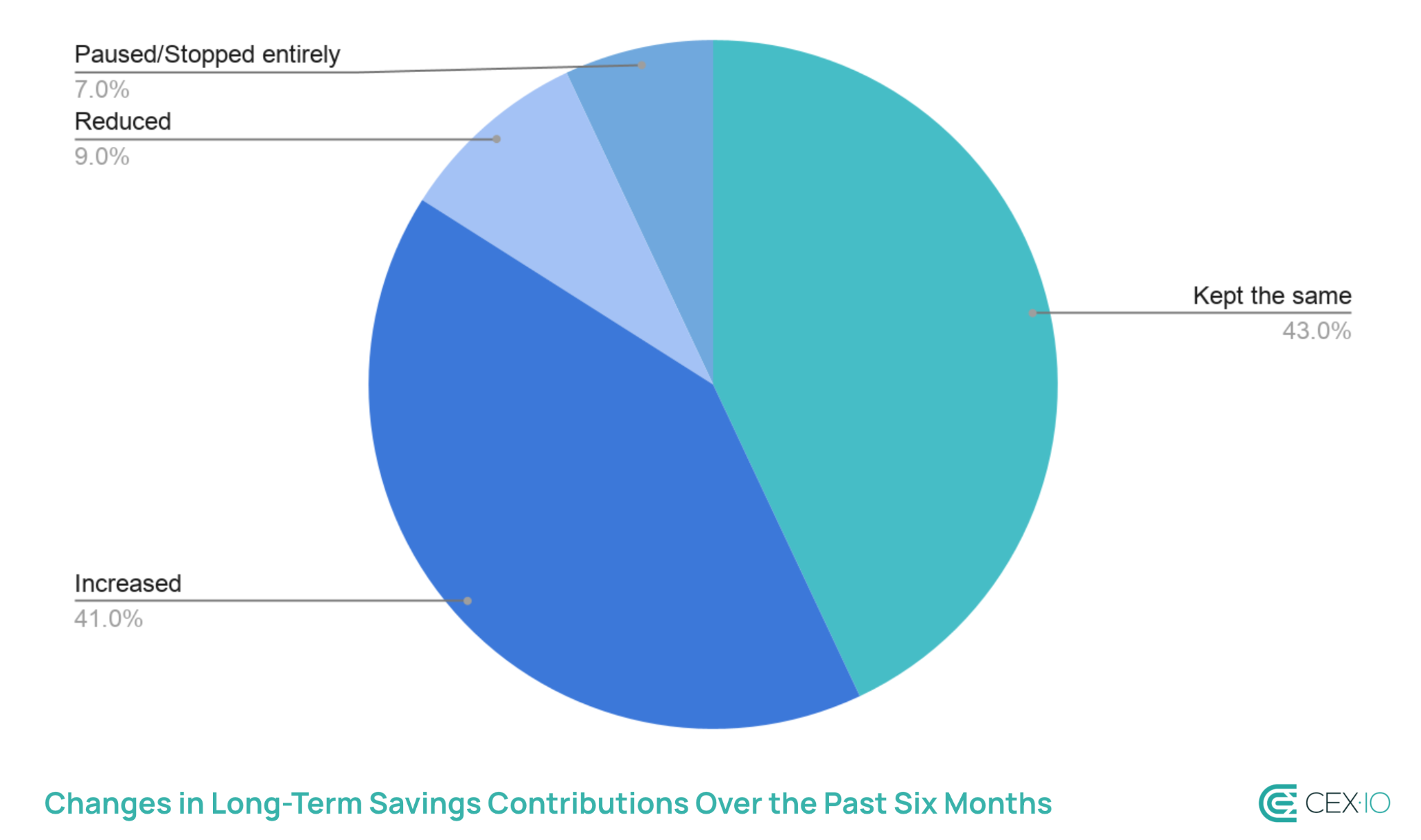
The savings picture adds another layer. 41% increased contributions to what was described as safer positions — this figure includes both traditional financial instruments and a rotation into stablecoins and yield-generating products, reflecting a crypto-native version of flight to safety. At the same time, 16% reduced or paused contributions to long-term savings entirely, potentially due to a desire to “buy the dip.”
5 in 10 Have Significant Crypto Concentration
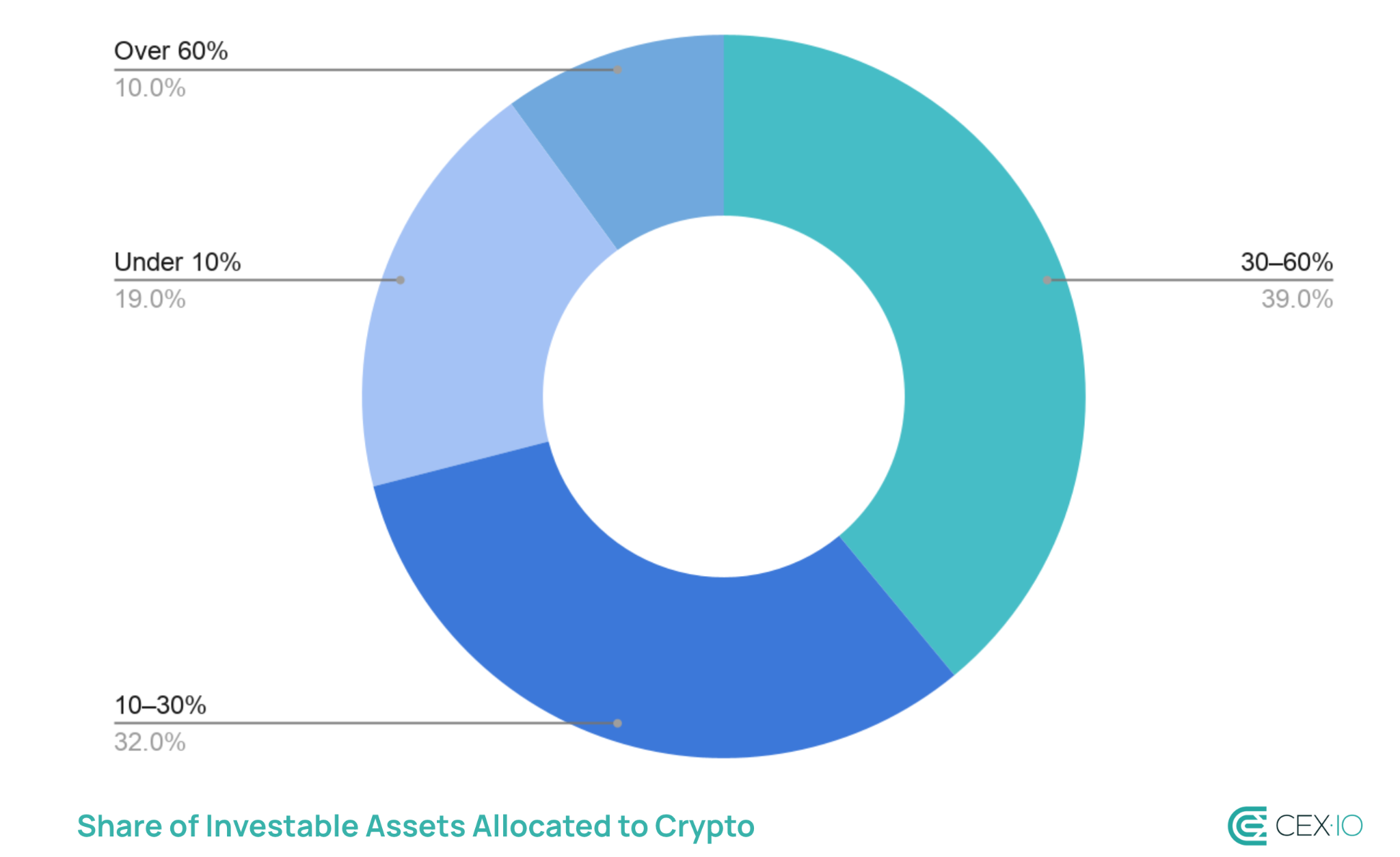
One of the main reasons why crypto impacted non-crypto-related spending in the first place is a significant exposure to digital assets. Within an observed sample, 49% of respondents stated they have more than 30% of their total investable assets in crypto.
And yet the income data suggests most have absorbed the pressure without dramatic action: 73% say the bear market has not changed how they pursue income at all, with only 9% taking on extra work or a side project as a direct response to their portfolio performance.
79% Are Holding or Adding
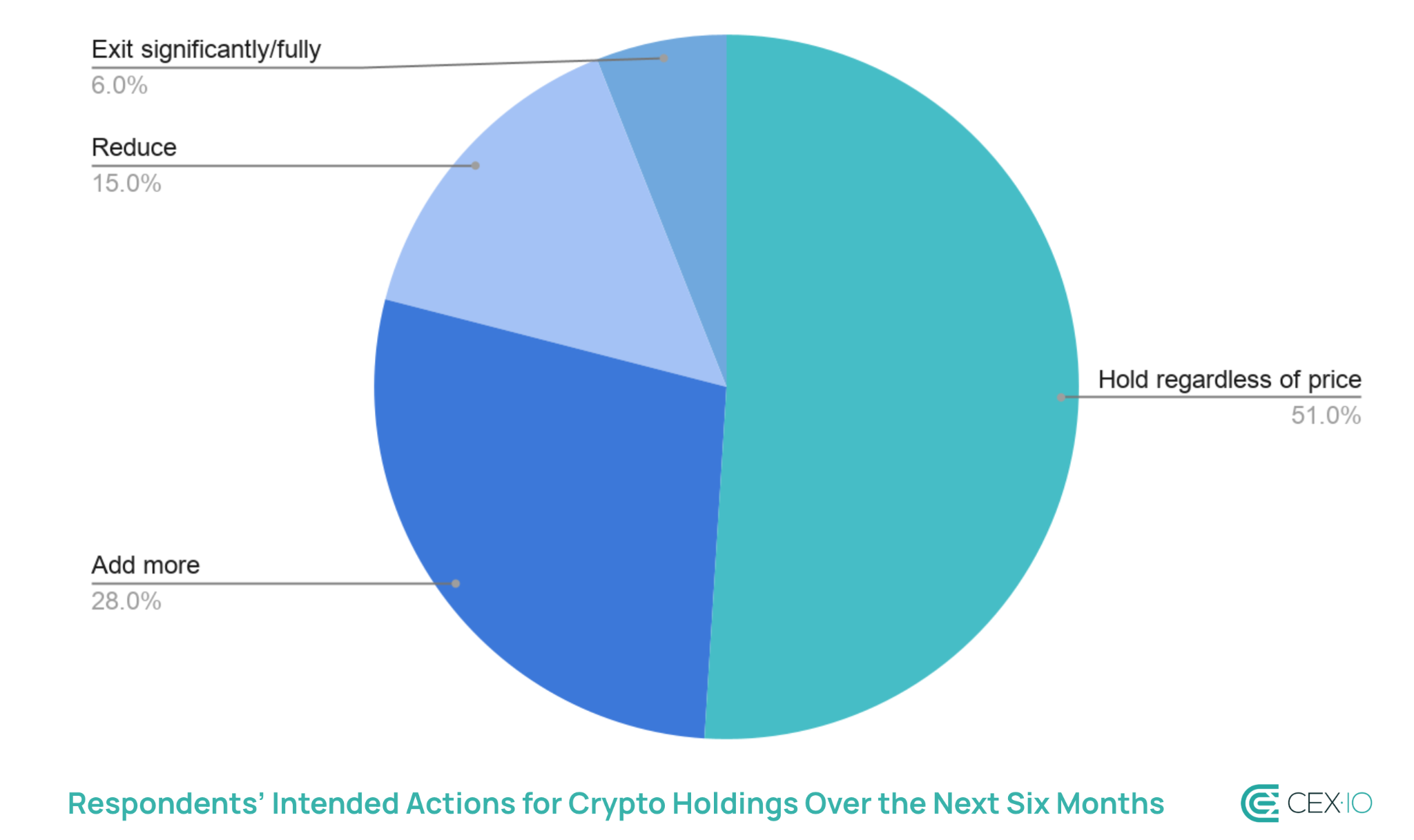
Despite certain issues, the dominant posture looking forward is optimistic. 51% plan to hold their positions regardless of short-term price action, while 28% plan to add more if prices stay at current levels or fall further.
The sentiment data supports this. 44% say they invested about the right amount in October 2025, and 24% say they wish they had invested more — not less. Only 26% feel they were overexposed.
What’s more revealing is how they think about what went wrong. When asked what single crypto-related decision they would change across the last 18 months, the most popular response that 41% selected was that they would have set clearer rules for when to take profits — and stuck to them. 22% said they have no regrets at all.
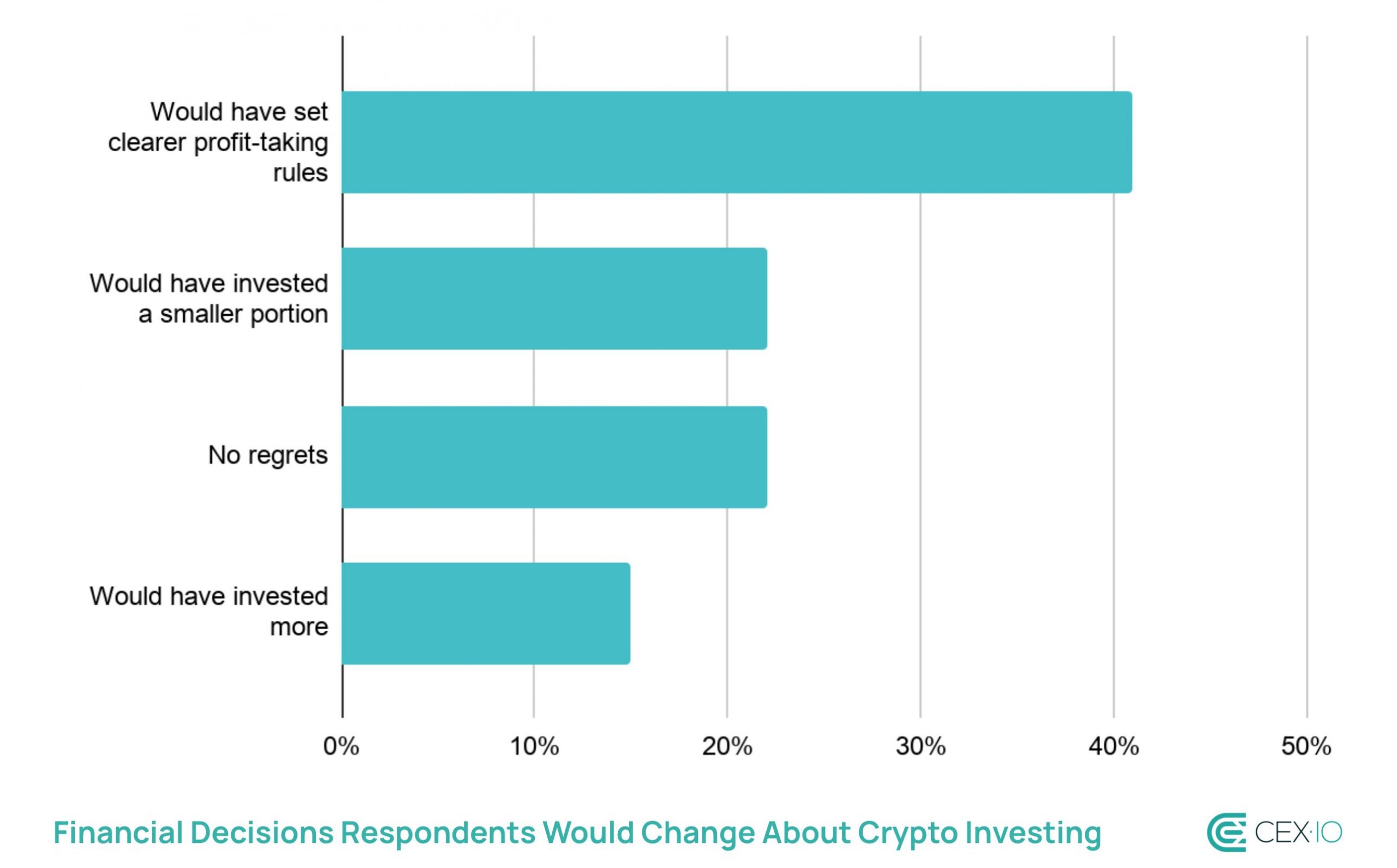
This suggests most respondents don’t believe they made a positioning mistake but rather an execution mistake. They believe they were in the right place but didn’t have a plan for the exit. It also explains why 79% are still optimistic about the market. They’ve lost faith in how they managed it, and they intend to do it better next time.
Conclusion
The 2025–2026 bear market has not produced the kind of systemic shock seen in past cycles (at least for now), but its effects appear to be showing up in quieter ways at the household level. More than a third of active crypto users cut non-crypto spending or delayed purchases because of market performance, while many reported cashflow pressure, reduced savings, or postponed major financial decisions.
What stands out, however, is that this pressure has not led to broad capitulation. Despite high portfolio concentration and signs of strain, most respondents say they are holding or adding to positions, while many view past mistakes less as being overinvested and more as failing to manage exits properly. That may be one of the defining differences of this downturn: pressure has been absorbed, not abandoned.
The web content provided by CEX.IO is for educational purposes only. The information and tools provided neither are, nor should be construed as, an offer, or a solicitation of an offer, or a recommendation, to buy, sell or hold any digital asset or to open a particular account or engage in any specific investment strategy. Digital asset markets are highly volatile and can lead to loss of funds.
The availability of the products, features, and services on the CEX.IO platform is subject to jurisdictional limitations. To understand what products and services are available in your region, please see our list of supported countries and territories. This page includes additional links to information about individual products, and their accessibility.